

















You know the moment: everything seems to say keep going, and yet something inside you tightens. Or you can't name a single logical reason, but a decision suddenly feels spacious, calm and right. The saying “intuition is the highest form of intelligence” speaks to exactly this experience. Not because intuition replaces every analysis, but because it gives you access to a kind of knowing that your mind alone sometimes misses.
To live in alignment, you need both: the clear view of thinking and the quiet truth of your inner compass. Intuition invites you to come back to yourself, beneath the expectations, the pace and the endless loop of thoughts.
INTUITION FLOW Coaching & MANIFESTATION CANDLE Workshop
What intuition really is
Intuition isn't a random impulse, nor is it a magic answer to every open question. It arises from perception. Your body, your subconscious and your past experiences pick up countless small signals: a tone of voice, the energy in a room, a recurring dynamic, a feeling of safety or of tightness. Even before you consciously sort this information, something inside you speaks up.
That's why intuition often doesn't feel loud. It doesn't argue endlessly. It comes as a clear yes, a gentle no, an image, a bodily knowing or a recurring thought. Perhaps you feel warmth in your chest when something is right. Perhaps you become tired, restless or tense when a situation doesn't match your truth.
From a spiritual point of view, intuition is the connection to your inner wisdom. It reminds you that you don't need outside approval for every decision. You can learn to listen to yourself.
Is intuition the highest form of intelligence?
The idea that intuition is the highest form of intelligence is powerful, as long as we don't misunderstand it. Intuition isn't “higher” than knowledge, facts or critical thinking. Rather, it's a form of intelligence that complements these levels. With important decisions in particular, it is both kind and wise to bring the two together.
When you choose a new flat, you can check the tenancy agreement, the location and your budget. And at the same time, you can notice how the place feels in your body. With a career decision, figures and conversations help you. But if the path feels heavy and small in the long run despite good arguments, that signal deserves attention.
Intuition becomes especially valuable when there's no perfect answer. Relationships, creative projects, personal growth and new beginnings can rarely be fully calculated. Here it doesn't necessarily show you the most comfortable path. But it often shows you the one that brings you closer to yourself.
Intuition is not the same as fear
This is the crucial distinction. Fear is usually urgent. It paints scenarios, wants to protect you immediately and often says: “Don't do that, or something bad will happen.” It can feel hectic, tight and repetitive.
Intuition, on the other hand, is often quieter. Even when it leads you to a brave decision, a core of clarity remains. It's more likely to say: “That doesn't suit me” or “I can take a closer look here.” It doesn't have to prove that it's right.
Of course fear and intuition can blend, especially when you're exhausted, carrying old wounds or under a lot of pressure. Then it isn't about blindly following your first reaction. It's about giving yourself space so that the signal can become clear.
Why we so often don't believe our inner voice
Many people have learned to adapt first. Be sensible. Be easy-going. Don't exaggerate. Wait for confirmation. These messages can lead us to play down our own sense of things, even though it keeps speaking up.
Constant stress also cuts us off from intuition. When you are in a permanent state of alarm, you look for safety, not for subtle nuances. A full calendar, constant notifications and too little rest make it hard to hear the language of your body.
Then there's the wish for absolute certainty. But intuition doesn't promise a one hundred per cent guarantee. It is an invitation to trust yourself, even if not every variable can be controlled. That can feel unfamiliar. And that's exactly where your strength lies.
How to strengthen your intuition in everyday life
Intuition doesn't grow under pressure. It becomes easier to hear when you give yourself small islands of presence. You don't need a complicated practice or perfect conditions. Regularity is worth more than a ritual that only exists on your wish list.
Create a moment without answers
Before you reach for your phone in the morning, pause briefly. Place a hand on your heart or your belly and ask yourself: “What do I really need today?” Don't wait for a spectacular sentence. Perhaps all that comes is the need for rest, movement, an honest conversation or a clear boundary.
This mini pause trains something essential: you turn your attention inwards before the outside world defines your day. An affirmation card, a quiet cup of tea or a few mindful breaths can frame this moment lovingly.
Ask your body, not just your head
When you're torn between two options, picture each possibility one after the other. Not as an endless list of pros and cons, but as a scene: you've already said yes. You're walking this path. What happens in your body?
Notice spaciousness and tightness, your breath, your shoulders and your belly. Physical signals aren't irrefutable facts. But they provide honest information that your head may overlook. After a few days, note down what keeps coming back. Recurring patterns are often more revealing than a single moment.
Give your energy a clear framework
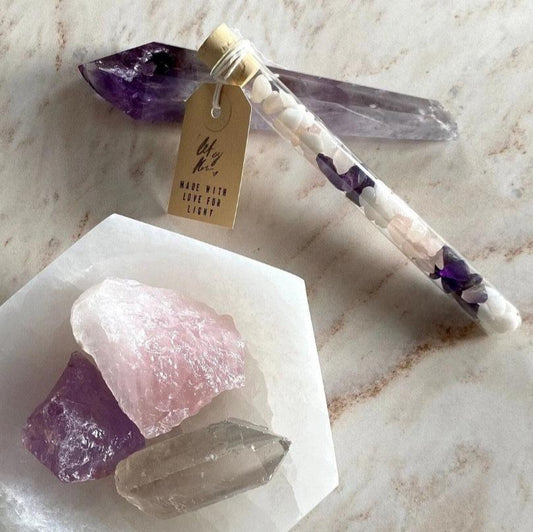
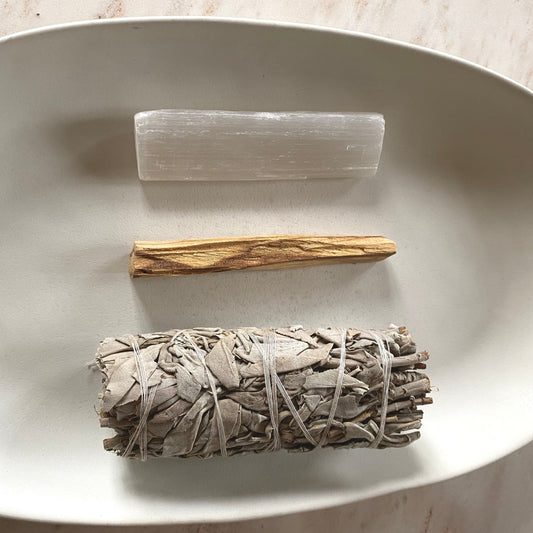
An evening ritual can help you let go of other people's expectations and the impressions of the day. Light a candle with your intention, cleanse the room in a way that feels good to you, or use a ritual oil as a sensory anchor. At LETGOFLOW, High Vibe Goods like these are allowed to look beautiful and at the same time be a real reminder: this moment belongs to you.
What matters isn't the object, but the attention you give it. Say, for example: “I let go of what doesn't belong to me. I listen to what feels true.” Repeated words can help you settle and refine your perception.
Make small decisions intuitively
Trust grows through experience. So don't practise on the biggest question of your life first, but on small things. Which book is calling you today? Which route through town feels nourishing? Who do you really want to spend time with?
Afterwards, look back honestly: how did the decision feel? What happened? This way you develop a personal map of your intuition. Over time, you'll recognise which signals truly belong to you and when old protective patterns take the wheel.
When intuition becomes a boundary
Sometimes your inner knowing doesn't show you the next big dream, but a necessary boundary. Perhaps you notice that a friendship regularly drains you. Perhaps your body says no to a project that looks good but doesn't feel good. Perhaps it's time to slow down.
An intuitive boundary doesn't have to be harsh or dramatic. It can be kind, clear and short: “That doesn't work for me right now.” You don't owe anyone a long justification just because you take your wellbeing seriously.
At the same time, it is wise not to rely on a feeling alone when decisions have health, financial or legal consequences. Get professional advice, check the information and treat your inner signal as one valuable part of the bigger picture. Self-trust and responsibility belong together.
Your inner voice needs your permission
Intuition isn't a test you have to pass. There will be days when everything is clear and days when you feel lost. Both are human. You don't have to hear your inner voice perfectly to get closer to it step by step.
When you give yourself stillness, honest self-reflection and small rituals, something precious emerges: a trust that doesn't depend on whether others understand your path. Perhaps intuition isn't the highest form of intelligence because it knows all the answers. Perhaps it is because it lovingly leads you back to your own truth, again and again.