

















The day often starts before you have really arrived in yourself: a glance at your phone, appointments, messages, expectations. That is why self-care in modern everyday life can be something that does not ask even more of you. It is not a project that has to be carried out perfectly. It is a loving pause that tells you: I am here. I am listening to myself. I am taking my place in my own life.
Real self-care does not always need a free afternoon, a spa trip or a flawless morning routine. Sometimes it begins with a candle on your bedside table, three conscious breaths before the next meeting or a sentence that lets your inner voice soften again. Small rituals do not necessarily change your calendar. But they can change how you feel within your calendar.
Why self-care in modern everyday life is so much more
Self-care is quickly associated with skincare, a bathtub and a free evening. All of that can be wonderful. But self-care goes deeper: it concerns your energy, your boundaries, your thoughts and the way you talk to yourself when nobody is listening.
In modern everyday life, we are constantly reachable and often juggling several roles at once. We function, organise, take care of others, react. We rarely get the signal that it is truly time to pause. This is exactly where a conscious ritual becomes valuable. It creates a transition between what is demanded of you and what you yourself need.
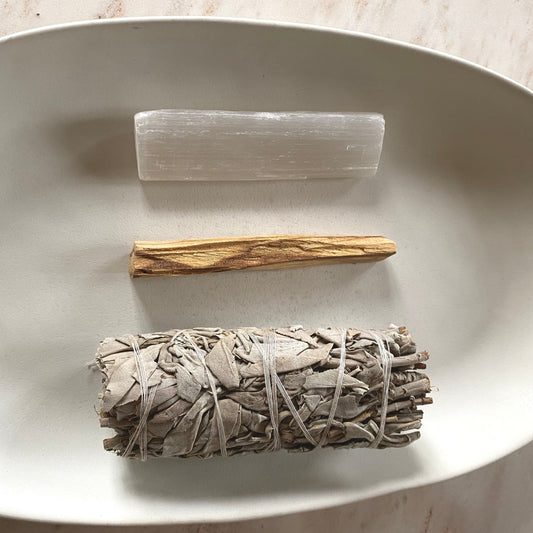
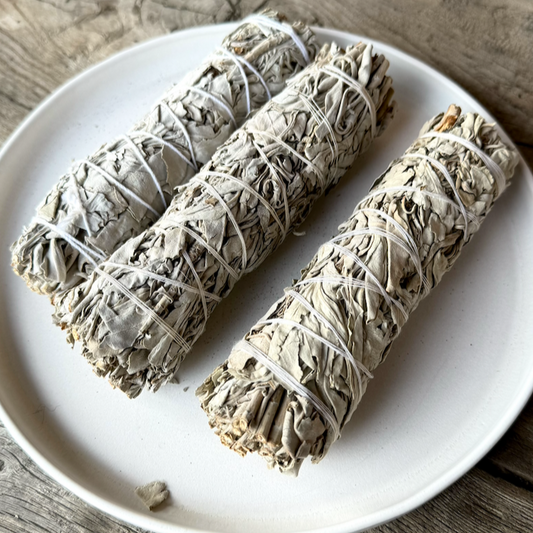
This is not about covering difficult feelings with beautiful things. A smudging ritual does not replace a clarifying conversation, and an affirmation does not make a decision for you. Rituals can, however, help you become quiet enough to look honestly. They turn a fleeting moment into a space for your truth.
Rituals instead of extra to-dos
When self-care feels like another obligation, it loses its strength. So the most helpful practice is not the longest one, but the one that truly fits into your life. Do not ask yourself: What should I be doing every day? Ask yourself: What would noticeably nourish me today?
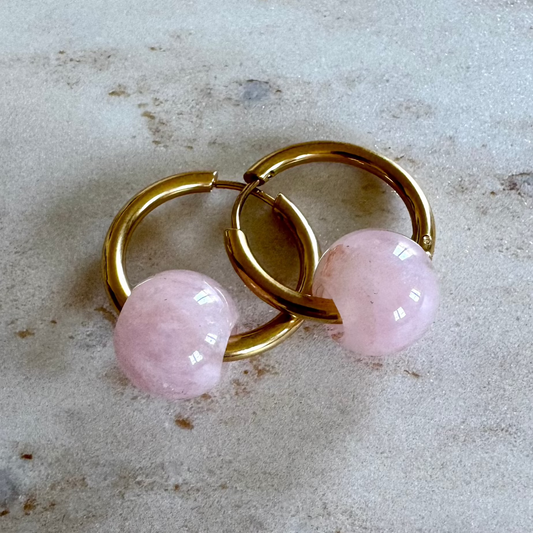
On hectic days, that might mean placing a hand on your heart before your first coffee and choosing an intention. On emotionally heavy days, it might mean dimming the lights, lighting a scented candle and allowing yourself not to have to solve anything. On good days, self-care can also be joy: wearing jewellery that reminds you of your strength, turning up the music or filling your space with fresh energy.
Repetition gives these small acts depth. Your body learns: when I notice this scent, when this flame is burning, when I speak these words, I can slow down. This is not magic in the sense of a shortcut. It is a conscious connection between an outer sign and an inner focus.
The morning: choosing your energy before it gets spread thin
The first minutes of the day do not have to be productive. They can belong to you. Perhaps you draw an affirmation card and take its message with you into the day. Perhaps you open the window, breathe in deeply and ask yourself: How do I want to feel today?
Choose an intention that does not put you under pressure. Instead of I have to get everything done, it could be: I stay with myself, even when things move fast. Instead of I must not make any mistakes: I trust my path. One sentence cannot rewrite a whole life, but it can change where your attention goes.
Between appointments: back into your body
Stress often pulls us out of our body and into our head. Thoughts race ahead while the here and now barely seems to exist. A short reset helps you gather your energy again.
Place both feet on the floor. Breathe out for longer than you breathe in. For a moment, feel your shoulders, your jaw, your hands. If you like, hold a stone, a piece of jewellery or a small object with personal meaning in your hand. Not because it has all the answers, but because it reminds you of your intention.
This practice may take a minute. That is exactly why it is so precious. Self-care does not have to be spectacular to make a difference.
The evening: consciously closing the day
Many people take the working day to bed with them energetically. Unanswered messages, conversations and worries keep drifting through the night. An evening ritual can create a gentle boundary.
That might be a warm shower with salt, a ritual oil on your wrists or mindfully tidying a small surface. Perhaps you cleanse the room with a scent that feels like home. Perhaps you write down three things you would like to let go of. What matters is not the perfect method, but the signal: this day is allowed to end.
What you can let go of
Self-care is not always pleasant. Sometimes it means saying no, even though you do not want to disappoint anyone. Sometimes it means doing less, taking a break or accepting support. This can feel unfamiliar at first, especially if you have learned to define your worth through being available or through what you achieve.
You can also let go of the idea that self-care always has to look beautiful. There are days when your most loving act is going to bed early, cancelling plans or simply crying. Growth is not linear, and inner alignment is not a state you reach once and then hold on to.
Comparing yourself with other people's routines can go, too. Someone else's morning practice, their crystal collection or their perfectly arranged altar say nothing about what you need. Your ritual is right when it does not take you away from yourself, but brings you closer.
Your space as a reminder of yourself
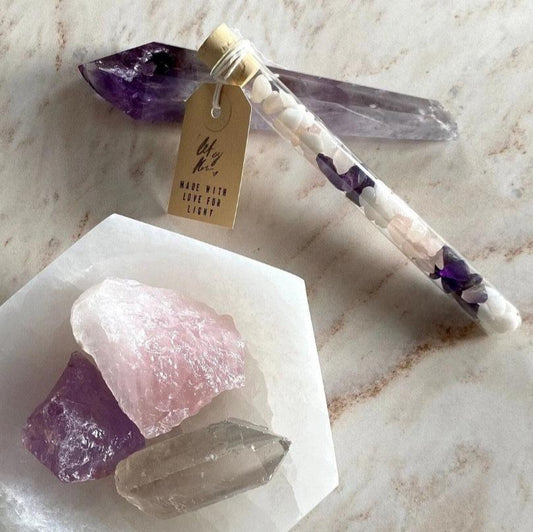
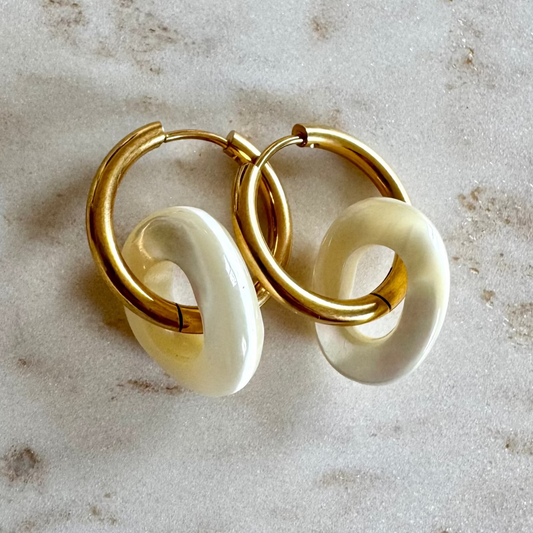
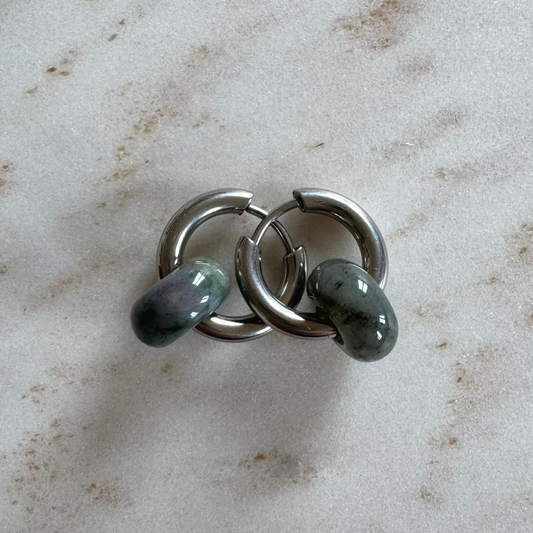
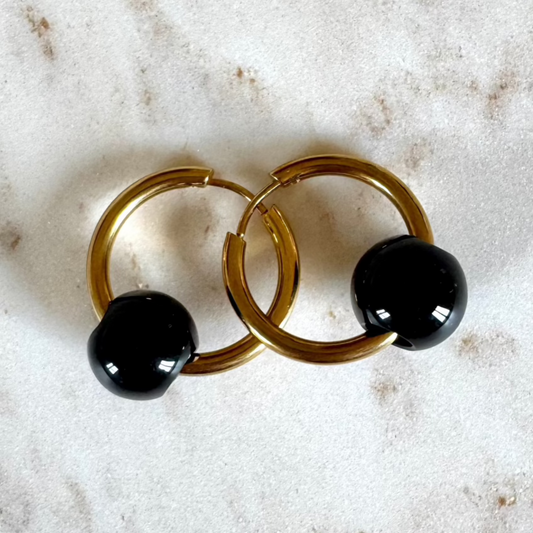
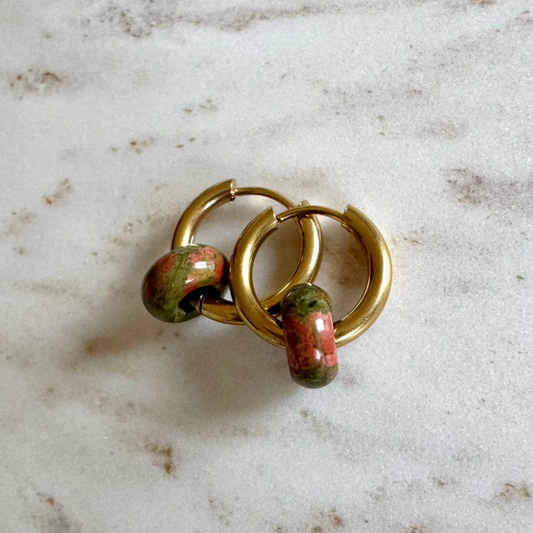
Our surroundings influence how we feel. A room does not have to be perfectly furnished to feel safe and warm. But a few consciously chosen things can change the energy of your everyday life: a candle you only light for quiet moments, a lovely spot for your cards, a small ritual tray or a piece of jewellery you connect with a personal intention.
Objects like these are not mere decoration. They can be anchors. They remind you to pause, to protect yourself, to celebrate yourself or to realign. At LETGOFLOW, this is exactly how High Vibe Goods come to life: handmade companions that bring together aesthetics and ritual and are designed with love for light.
Choose less, but more consciously. A ritual object gains meaning when you give it a story of its own. Perhaps a manifestation candle becomes a symbol of self-trust. A ritual oil accompanies you through a time of letting go. A bracelet reminds you, every time you look at your wrist, that you want to stay true to yourself.
A gentle practice for seven days
If you would like to feel more connected to yourself again, try one simple rule for a week: give yourself ten minutes a day without a screen and without expectations. Decide intuitively what calls to you. One day you might want to meditate, the next to draw cards, write, burn incense or simply sit in silence.
Do not watch whether you are doing it right. Just notice what changes. Do you feel clearer? Calmer? More honest about your needs? Perhaps you will also notice that ten minutes is too much on some days. Then take two. Self-care is not a test. It can adapt to your life.
Over time, something valuable grows: trust. Not the trust that every day will be easy, but the trust that you will not abandon yourself when things get loud, fast or emotional.
Your energy deserves attention not only when everything has become too much. Give yourself small, sacred moments even when you are doing well. Not as a reward for what you achieve, but as a reminder that you are already worthy of holding yourself with love.