

















When everything feels heavy, loud or stuck, we usually don't wish for yet another task on the to-do list. We wish for a moment in which we can come back to ourselves. Making room for self-care therefore doesn't mean fixing yourself or forcing change. It means giving your body, your mind and your heart conditions in which rest and renewal can have more space again.
Your body already carries a deep, natural intelligence: every day it regulates, processes, protects and renews itself. Small rituals cannot control these processes, but they can remind you to slow down, notice signals and stay lovingly connected with yourself. That is where their quiet magic lies.
What Self-Care Really Means
Self-care is often misunderstood. It is not a promise that positive thoughts will make every illness disappear. And it isn't a competition in which you only have to meditate, manifest or let go enough to always be healthy and happy.
Rather, it is about supporting the natural ability of your body and mind to respond to strain, find stability and realign after difficult phases. Sleep, food, movement, medical care, safe relationships, breaks and emotional processing all play a part. A ritual is no substitute for medical or psychotherapeutic support. But it can be a valuable bridge: between what you feel and what you can lovingly do for yourself in everyday life.
Especially if you have been running on autopilot for a long time, rest can feel unfamiliar. Maybe restlessness shows up as soon as things go quiet. Maybe you believe you have to understand everything before you are allowed to relax. You don't have to wait. You can begin with a small, safe sign: I'm here. I'm listening to myself.
Self-Care Through Calm Instead of Pressure
We don't always distinguish clearly between real danger and an overfull calendar, a stressful message or an unresolved conflict. When tension becomes a permanent state, it gets hard to think clearly, sleep well or trust your own needs.
The invitation is not to spiritualise stress away. It is to regularly offer yourself moments of safety. That might be a deep breath at an open window, a hand on your heart, a warm cup of tea or consciously lighting a candle. Repetition matters more than perfection. A three-minute ritual that you actually live often carries you further than an hour-long routine that only adds pressure.
So don't ask yourself: What do I have to do to feel better immediately? Ask yourself: What helps me feel one percent safer, softer or clearer right now? This question is small enough to be honest, and strong enough to change something.
A Morning Moment for Your Inner Alignment
Before you reach for your phone, sit upright for a moment. Place both feet on the floor and feel the surface beneath you. Breathe in slowly and breathe out a little longer. You don't have to visualise anything if it doesn't feel right. It's enough to notice your body.
Then draw an affirmation card or choose a sentence that doesn't put you under pressure to perform. Instead of "I am always full of energy", a believable sentence might be: "Today I can take good care of my energy." Believable affirmations find a place within you more easily. They are not commands, but loving reminders.
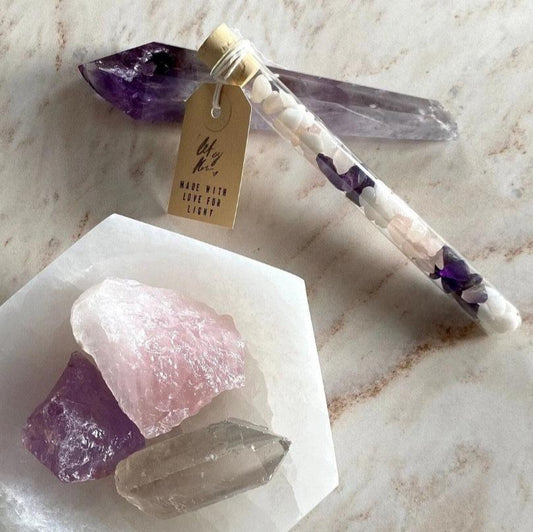
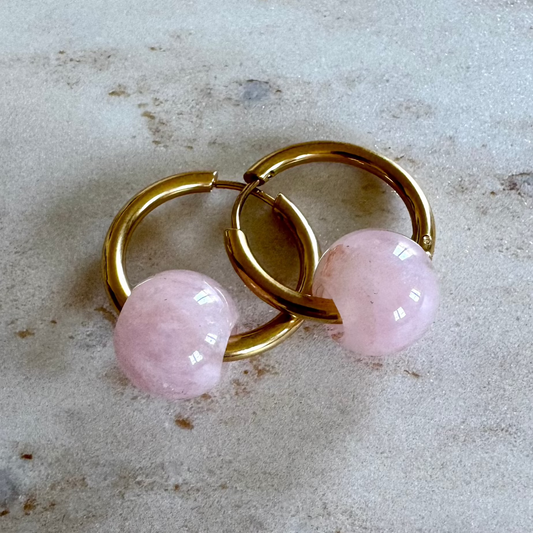
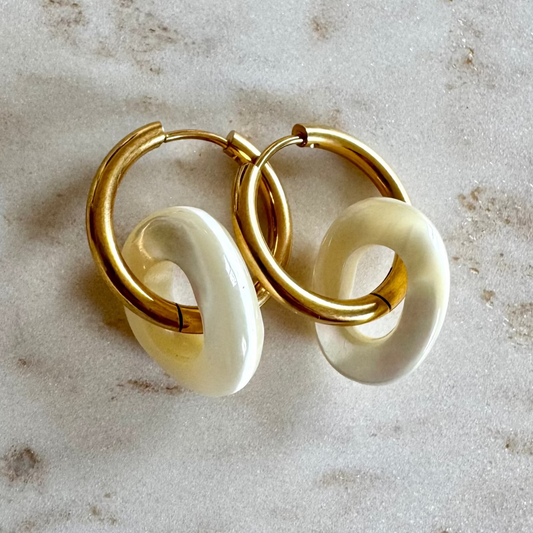
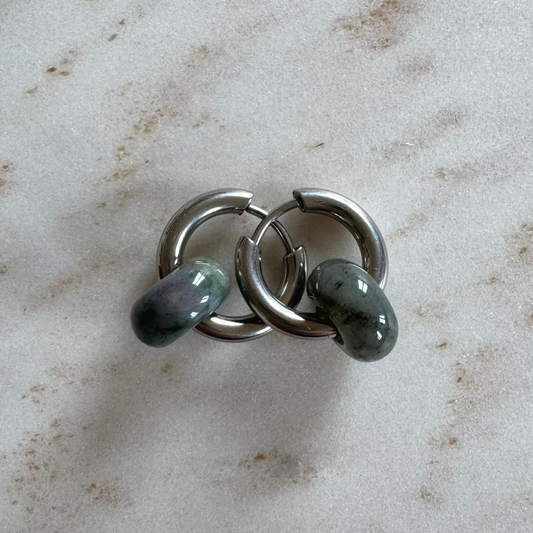
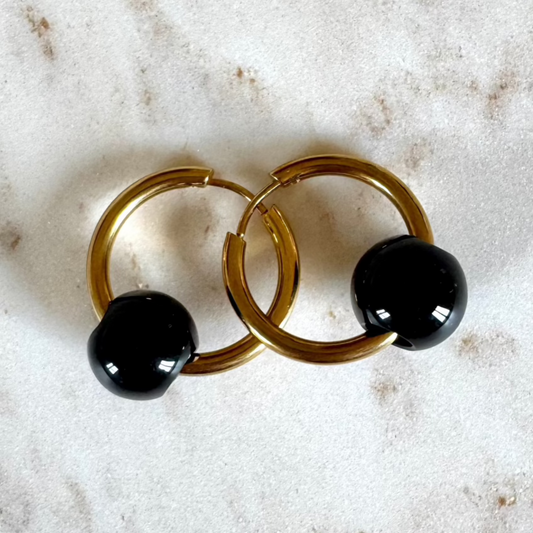
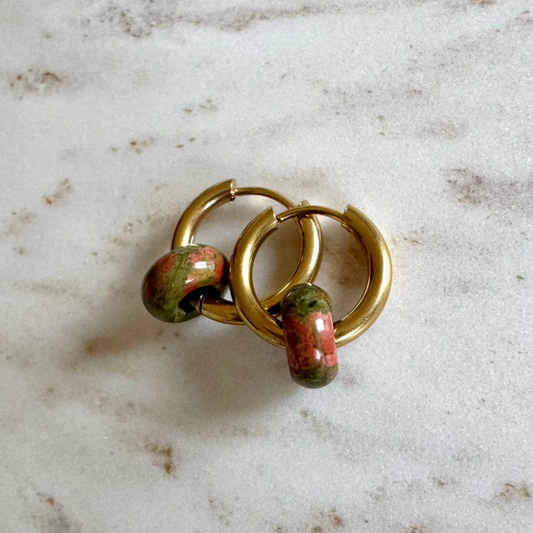
If you like, connect this moment with a piece of jewellery or a crystal that you wear consciously as an anchor. Not because an object has to solve your issues for you, but because touch can help you remember. Every time your hand touches the pendant or ring, you return to your intention.
Your Evening Ritual: Letting Go Without Losing Yourself
In the evening, everything there was no room for during the day often piles up. Thoughts circle, feelings grow louder, the body stays on alert. A short transition between the day and the night can help you avoid going to bed with the full weight of the day.
Dim the lights, light a candle and give the room a clear message: nothing more has to be achieved now. A ritual oil on your wrists or over your heart can accompany this moment in a sensory way. Choose scents you find calming and pleasant. With sensitive skin, an oil should always be used appropriately, and if you don't tolerate it well: better to leave it out than push through.
Then write down three sentences: What moved me today? What can rest for today? What would I like to treat more lovingly tomorrow? You don't have to find big insights. Sometimes the most honest answer is simply: "I'm tired." That is self-awareness too. That is a beginning too.
If Burning Incense Is Part of Your Practice
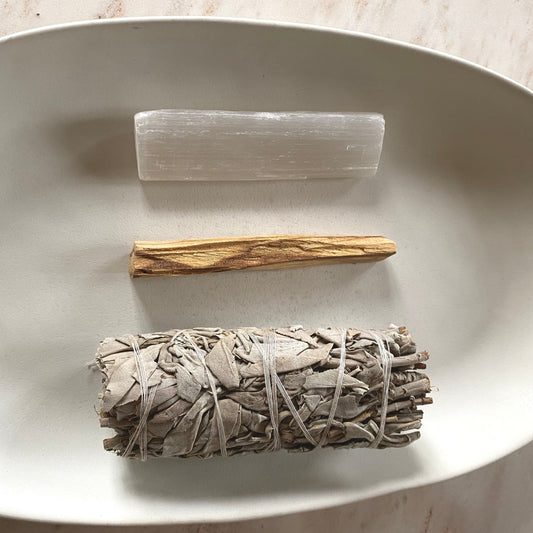
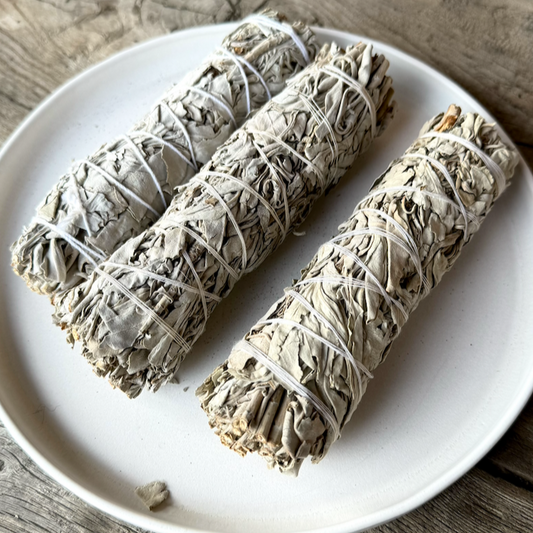
Burning incense can feel like a conscious energetic reset for your space. Open a window first, move the smoke mindfully through the room and focus your attention on what may stay: calm, clarity, protection, love. Afterwards, air the room well and never leave smouldering incense unattended.
Not everyone reacts the same way to smoke or intense scents. With respiratory conditions, sensitivities, pets or small children, a smoke-free alternative is often the better choice. You can cleanse the room just as consciously with sound, fresh air, a candle or a quick tidy-up. What makes a ritual meaningful isn't as much smoke as possible, but your presence.
Rituals Don't Need a Perfect Setting
An aesthetic ritual corner can be beautiful: a candle, a favourite crystal, a small bowl of salt, cards and a place that belongs only to you. But please don't turn spirituality into yet another ideal you have to chase. Your self-care is worth no less if it happens between the laundry basket and your work bag.
Maybe your altar is a bedside table. Maybe it's a small pouch with a ritual oil, a card and a stone for on the go. Maybe your ritual today consists only of taking five conscious breaths before you answer a message. That is not "too little". It is a decision for connection.
LETGOFLOW stands for exactly this kind of everyday magic: things that may look beautiful and carry an intention at the same time. A hand-poured candle, a lovingly chosen piece of jewellery or a card set then doesn't become a quick fix, but a visible sign: my needs deserve space.
How to Tell That Your Ritual Is Good for You
A ritual that feels right doesn't make you dependent on particular objects, moon phases or perfect conditions. It brings you closer to yourself. Perhaps you notice earlier when you have reached your limits. Perhaps you say no more often, fall asleep a little more consciously or find your way back to your breath more easily after a difficult conversation.
But there may also be days when you don't want to light a candle, manifest anything or forgive anyone. Then it's perfectly fine to simplify your ritual. Place a hand on your belly and say: "Today it can be easy." Growth doesn't happen in a straight line. It has waves, pauses and sometimes setbacks that aren't really setbacks, but signals for more care.
If symptoms are new, severe, persistent or worrying, please seek medical or psychological support. Self-care and professional help belong together. Accepting support is not a sign of lacking spiritual strength. It is an expression of self-love.
You don't have to become a new version of yourself before you deserve care. Begin where you are right now: with a breath, a warm light, an honest question to yourself. Your ritual can be quiet. Its value doesn't lie in looking perfect, but in the fact that you meet yourself in it again and again.