



















The day was full and your head is even fuller. This is exactly when you don't need a perfect wellness programme, but a ritual that gently brings you back to yourself. If you are looking for an evening ritual example that feels like real relief rather than another duty, it can be simple, beautiful and right for you. Not complicated. Not rigid. More like a quiet transition from the outside world to your inner one.
An evening ritual is more than self-care before bed. It is an energetic full stop. You are not only closing to-dos, conversations and stimuli, but also the inner tension that often follows you into bed without you noticing. Especially if you feel a lot, give a lot or find it hard to switch off, this moment in the evening becomes a small anchor.
An evening ritual example that really fits into everyday life
The most beautiful ritual is of little use if it only works on perfect days. That is why a good evening ritual does not start with ten steps, but with one decision: I am letting go of the day now. That sentence alone changes something. It turns a habit into a conscious act.
A harmonious evening ritual example might look like this: you dim the lights, put your phone out of reach and open the window for a moment. Fresh air clears not only the room but also your head. Then you light a candle or create a calm light in some other way. This small change tells your body that performance is now on pause.
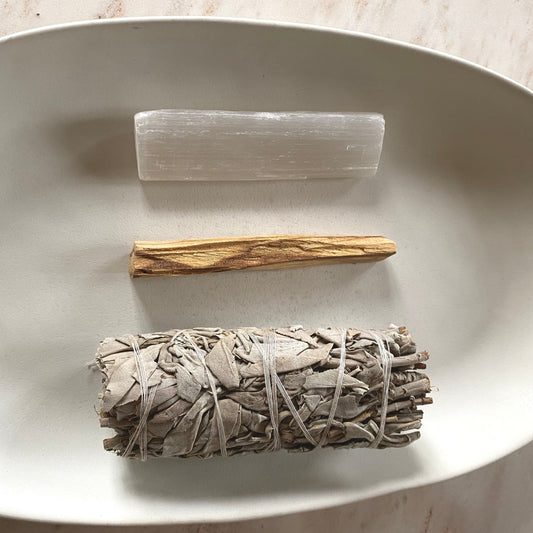
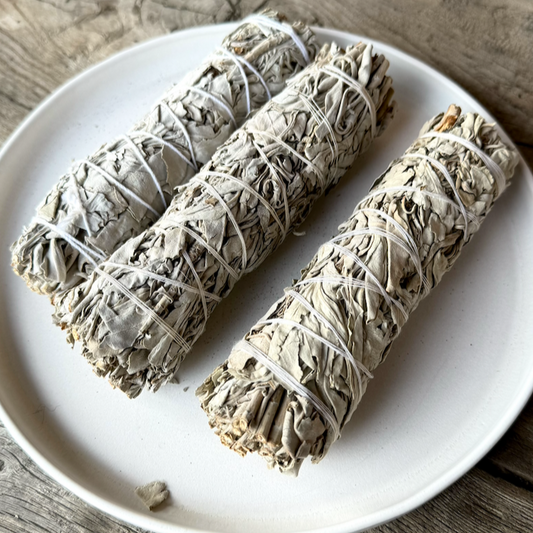
Next, you cleanse not only your face but also, inwardly, your day. That can happen through a few deep breaths, a soft scent in the room or a short smudging ritual, if that suits you. Some people love working with a ritual oil on their pulse points or over the heart. Others immediately feel calmer when salt, warmth and water come into play. There is no spiritual must here. What matters is that your body understands: you are safe. You don't have to prove anything else today.
Then comes the part that is often underestimated: emotional unloading. Take two or three minutes and ask yourself: what do I not want to take with me into the night? Maybe it is a conversation that is still lingering. Maybe pressure, comparison or that vague restlessness that has no clear name. Write down one sentence, say it out loud or consciously breathe it out. Letting go becomes easier when it takes shape.
Why an evening ritual often works better than more discipline
Many people try to simply scroll less in the evening, go to bed earlier or recover more productively. The problem is not willpower, it is the transition. Our system does not just switch over because the clock shows a certain time. It needs signals, repetition and a sense of reliability.
This is exactly where the strength of a ritual lies. It replaces the inner struggle with rhythm. Instead of forcing yourself to be calm, you create an atmosphere in which calm becomes more likely. That is an important difference. Spiritual self-care is not there to add another task to your list. It is allowed to catch you.
An evening ritual is especially helpful when it speaks to several levels: the room, the body, the breath and your thoughts. Even if only one of them is included, it is still valuable. On some days a candle and one honest sentence are enough. On others you need more grounding, more stillness or more comfort. Your ritual is allowed to move with you.
How to build your own evening ritual example
If you want to develop your personal evening ritual, think in phases rather than rules. The first phase is winding down. This is about light, volume, screen time and pace. Anything that becomes gentler helps your system to switch over.
The second phase is cleansing. This can be meant physically, for example with a warm shower, skincare or a foot bath. But it can just as well be understood energetically, for example with smoke, scent, sound or conscious breathwork. Cleansing does not mean the day was bad. It only means it doesn't have to come with you into tomorrow.
The third phase is intention. Many people skip this step and then wonder why the evening feels calm but somehow empty inside. Setting an intention means giving your subconscious one more clear, loving message. This can be an affirmation such as: I am held. I am allowed to let go. Or: I trust that the night will renew me.
The fourth phase is receiving. No more thinking, no analysing, no optimising. Perhaps you drink a warm tea, read a few pages, place your hand on your heart or listen to a gentle meditation. Softness can arise here. Not every night feels magical. But every night can give you a little of yourself back.
Which evening ritual suits whom
Not every soul relaxes in the same way. If you get overstimulated quickly, your ritual should be as low in stimuli as possible. Less input, less brightness, fewer decisions. Simple, recurring elements then work best.
If you tend to get caught in loops of overthinking, a ritual with some form of expression will probably help you. Writing, drawing cards, saying your thoughts out loud or taking a short moment of gratitude: all of this gives the mind a direction. Without this step you often take too much mental activity with you to bed.
If you spend a lot of the day caring for others, your evening ritual needs above all reconnection. Touch, scent, warmth and loving words are then not extras, but essentials. Feminine self-care in particular thrives on being not only functional but beautiful. Aesthetics are not a luxury here. They create resonance.
A gentle 15-minute routine
You don't need to clear a whole hour for a ritual to carry you. Fifteen minutes are often completely enough if they are filled consciously. Imagine you come home after a long day or finally get a moment of rest. You don't start by tidying up your whole life, but with one small gesture. Dim the lights. Put your phone away. Open the window.
Then comes a moment for the body. Cleanse your face, oil your hands, loosen your shoulders, breathe deeply. After that, a moment for the energy in the room: a candle, a scent or a short cleansing. Then a moment for your inner world: one sentence in your journal, an affirmation card you have drawn, or the question of what you want to let go of today. At the end you don't just lie down in bed, you settle into a feeling of closure.
That is the difference between being tired and truly coming to rest.
What often sabotages an evening ritual
The most common mistake is taking on too much. If your ritual is too long, too elaborate or too ambitious, it quickly becomes something you "also have to get done". That goes against its very purpose. Better to start small and make it beautiful.
Perfectionism also often gets in the way. Some people wait for the right mood, a tidy room or the ideal evening. But rituals are there precisely for the restless days. If you are exhausted, your evening ritual can consist of just three elements. If you have energy, it can grow.
And then there is consistency. Not every night has to look the same. At the same time, repetition helps. So it is not about rigid control, but about familiar markers. When your system regularly receives the same signals, it responds more quickly with relaxation.
If you would like to bring in spirituality
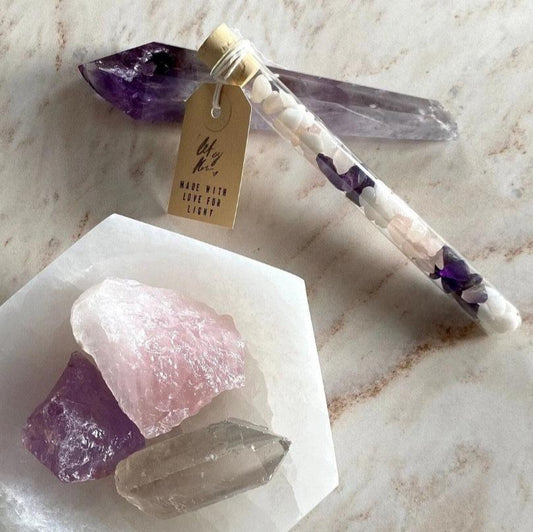
A spiritual evening ritual does not have to be heavy or mysterious. At its core it is about presence, intention and caring for your energy. You can work with crystals if they support you. You can light a candle for peace, self-love or clarity. You can connect a few drops of a ritual oil with an intention. Everything can stay simple, as long as it feels genuine to you.
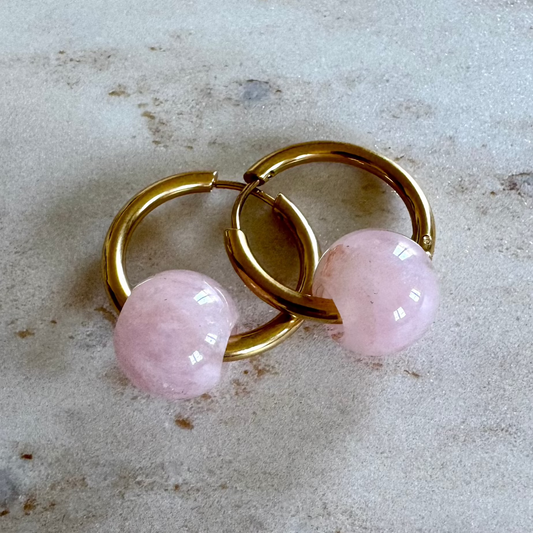
This is where that special connection between self-care and ritual comes about. Things that are beautiful can also be meaningful. A consciously chosen object, a pleasant scent or a handmade candle will not automatically transform an evening, but they can help you tune in more easily. And sometimes that is exactly where change begins. Brands like LETGOFLOW meet this wish for meaning and aesthetics very precisely, because they show rituals not as a rigid concept but as a loving everyday practice.
Your evening can gather you up again
Perhaps the best evening ritual example is not a fixed scheme in the end, but an attitude: I am ending this day consciously. I take myself seriously. I give myself a space in which I don't have to perform. From there, everything else follows almost by itself.
If you want to start today, don't choose the most elaborate ritual, but the one you would repeat tomorrow. A candle. Three breaths. One sentence. A soft light. Sometimes that is all it takes to turn a restless evening into a loving transition.