




















Sometimes you notice it first not in your head but in your body: the heavy chest after a conversation, the tiredness that stays despite sleep, the feeling of having become a stranger to yourself. Finding your own way back to yourself doesn’t mean having to carry everything alone. It means stepping back into a loving relationship with yourself and no longer ignoring your inner voice.
Caring for yourself in this way is not a perfect project and not a straight line. It can begin quietly: with a conscious breath, a no without guilt or the decision not to avoid yourself again today. Your strength was never gone. Perhaps it was just hidden beneath expectations, old stories and a full everyday life.
What finding your way back to yourself really means
This kind of inner work is often linked to the wish to make pain disappear as quickly as possible. But real inner growth is not the same as pushing things away, positive thinking or constant self-optimisation. It invites you to notice what is there, with compassion instead of judgement.
That can mean taking your needs more seriously, recognising old patterns or more often giving yourself the signal: you are safe. It can also mean accepting help. Independence doesn’t mean isolation. It means that you trust yourself and consciously decide which support is good for you.
Physical or mental health complaints always deserve professional attention as well. Rituals, affirmations and spiritual practice can accompany you emotionally, but they do not replace medical, therapeutic or psychological treatment. Both can exist side by side: professional support and your very own way of reconnecting with yourself.
Finding your way back to yourself: your inner ground
Many people wait for the right moment, the right method or a person who will finally tell them what to do. Yet your path often begins where you stop losing yourself in the outside world. Not because other people don’t matter, but because your inner world deserves a voice that gets just as much space.
Don’t only ask yourself: what should I do? Also ask: what do I really need right now? Perhaps the answer is rest. Perhaps movement, an honest conversation, an ending, a beginning or simply a glass of water and ten minutes without a screen. Small answers are no less valuable just because they seem unspectacular.
Your inner ground grows through repetition. When you show yourself every day that you are listening to yourself, self-trust grows not as loud proof but as a quiet certainty. You learn: I can meet myself, even when it gets uncomfortable.
From controlling to accompanying
It is understandable to want to control this process. When something hurts, we look for a plan that is guaranteed to work. But feelings rarely follow a checklist. On some days you feel clear and open, on others an old theme comes up again. That is not automatically a step backwards.
On difficult days, try not to fix yourself. Accompany yourself. Place a hand on your heart, name honestly what you feel and ask: what would give me a little more support right now? This attitude changes the path. You don’t become a project that needs optimising, but a person who deserves care.
A ritual that brings you back to yourself
Rituals don’t work because they demand some magical performance from you. They work because they mark a pause. They set an intention and create a space in which you can hear yourself again. A ritual can be beautiful, fragrant, quiet and entirely your own. But it doesn’t have to be elaborate to have meaning.
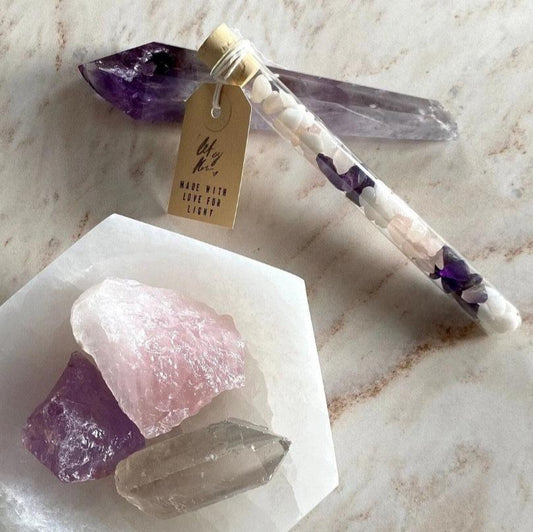
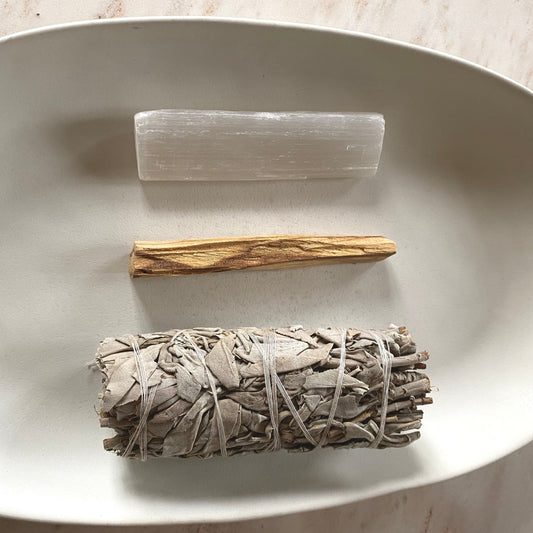
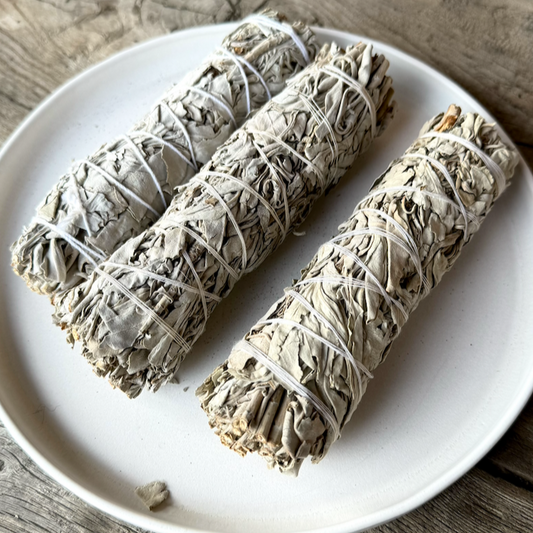
Choose a place where you can be undisturbed for a few minutes. Light a candle, gently cleanse the room with a scent that feels clear to you, or hold a crystal as a reminder of your intention. At LETGOFLOW, little companions like these are made with love for light: not as a solution outside of you, but as a visible invitation to arrive with yourself.
You can shape your ritual in four simple movements:
- Arriving: breathe out slowly and feel both feet on the ground.
- Noticing: name, without judgement, what is alive in you right now.
- Aligning: speak an affirmation that feels honest.
- Closing: write down one small step you want to give yourself today.
One possible affirmation is: “I don’t have to understand everything straight away. I can give myself time and I stay by my own side.” If words don’t feel true yet, phrase them more softly. “I am completely whole” can become “I am open to growth at my own pace.” Honesty carries you further than a sentence your inner self can’t believe.
Taking your body’s language seriously
Your body is constantly talking to you, often before your mind is ready to listen. A tight jaw can point to tension. Shallow breathing can be a sign that you have been running on autopilot for hours. Exhaustion can have many causes and should not be romanticised spiritually. It may need a break, but it may also need a medical check.
Caring for yourself therefore also means not overriding these signals. Instead of criticising yourself for being tired, sensitive or overwhelmed, you can become curious. When do I feel more open? Which encounters drain my energy? What truly nourishes me, emotionally, physically and energetically?
These questions don’t make you selfish. They make you responsible for your wellbeing. Boundaries are not a cold protective wall. They are a form of self-respect. Every clear no creates space for a yes that really feels like you.
When old patterns come back
An old pattern can show up even though you have long understood a great deal. Perhaps you seek approval, adapt to others or withdraw as soon as closeness develops. Be especially gentle with yourself then. Patterns were once strategies that helped you cope. You don’t have to shame them in order to change them.
Notice what they trigger and practise a new, small response. If you usually say yes straight away, ask for time to think. If you push feelings away, write unfiltered in a notebook for three minutes. If you lose yourself, ask: what is my next loving step? Change becomes sustainable when it doesn’t work against you.
Spiritual practice without pressure to perform
Drawing cards, journaling, smudging, moon rituals or manifestation can be wonderful anchors. They give form to the invisible and remind you that your inner world counts. At the same time, you are allowed to let them go if they start to feel like another obligation.
You don’t have to meditate at five every morning to feel spiritually connected. Nor do you always have to vibrate positively. Grief, anger and doubt are not worth less. They don’t want to put out your light; they want to be seen so that you can feel whole again.
Choose practices that bring you into your body and into the present. A warm shower with salt, a quiet walk, music that softens you or a candle at dinner can be more powerful than a ritual you only carry out under pressure. Your spirituality is allowed to fit into everyday life. It is allowed to follow you.
Your journey is allowed its own pace
Perhaps you wish for a clear sign that you have arrived. But growth often shows itself differently: you no longer react straight away. You rest better. You speak to yourself more kindly. You stay with yourself, even when others don’t understand you. These are not small things. They are quiet changes that go deep.
Don’t compare your process with that of people whose chapters you only see from the outside. What feels freeing for one person can still be too much for another. It depends on what you have been through, how much safety you have right now and what resources support you. Your pace is not a weakness. It is an expression of self-respect.
If you take just one thing with you today, let it be this: you don’t have to be perfect before you meet yourself with love. Light your candle, breathe out consciously and take the next small step. Not away from yourself, but gently back into your own strength.