


















Sometimes the truth doesn't show up as a big breakdown but as a small resistance: you say yes even though your body says no. You smile even though something in you tightens. You light a candle, draw a card and still sense that you are avoiding yourself right now. This is exactly where the question comes in: why honest self-reflection feels so good.
It is not another item on your self-optimisation list. It is a loving moment in which you stop overriding yourself. Not to criticise yourself, but to come back to yourself. Because what is allowed to be seen no longer has to work against you in the shadows.
54 Everyday Spirit Guide Cards
Why honest self-reflection feels so good
Honest self-reflection first creates something very simple and very powerful: contact. Contact with your needs, your boundaries, your anger, your longing, and also with the parts of you that you would rather outshine with spirituality. Positive thinking can be strengthening. But it becomes an escape when it forbids you to be sad, disappointed or exhausted.
Caring for yourself in this way doesn't mean that an honest look closes every wound by itself or replaces professional support. Deep trauma, depression, anxiety or ongoing overwhelm deserve therapeutic and medical care. Self-reflection can, however, be a valuable part of your path: it helps you recognise patterns, make sense of your feelings and align your decisions more closely with your truth again.
Say you notice that in relationships you always give especially much when you are afraid of distance. Recognising this doesn't change your behaviour straight away. But it gives you a gap. In that gap you can pause before you abandon yourself. You can ask: Do I really want to help right now, or am I hoping to be loved for it?
This pause is not small. It is the moment in which old automatic patterns can lose their power.
Honest self-reflection with the 54 Everyday Spirit Guide Cards
Growth begins where excuses end
We all have good reasons for not fully facing ourselves. Maybe you learned early on to be strong. Maybe harmony mattered more than honesty. Maybe you were taught that your needs are too much or your feelings inconvenient. Then self-reflection doesn't feel like self-love at first, but like a risk.
That's why honesty needs a soft attitude. It's not about analysing every reaction and dissecting every mistake. The sentence “I am jealous” is not a verdict on your character. It is information. “I am hurt” is not drama. It is a signal. “I want something different” is not a betrayal of your life so far. It can be a sign that your soul is calling for more alignment.
Caring for yourself doesn't mean always being pleasant. It means believing yourself when something in you is true.
Shame loses its power once it is put into words
Shame thrives on secrecy. It whispers that you are the only one who feels this way, who made the wrong decision or who longs for something she supposedly shouldn't have. Honest self-reflection answers this voice with a different question: What exactly am I ashamed to feel, and whose rule is this anyway?
Often you find that you are defending someone else's standard. The expectation to always be available. The notion that success only comes from constant performance. The idea that you have to be grateful even when you have long been unhappy. As soon as you recognise these inherited beliefs, you gain the freedom to choose.
You don't have to resolve every story from your past before you begin a new chapter. But you can stop confusing the old story with your worth today.
The difference between reflection and brooding
Not all thinking is helpful. Brooding goes round in circles. It often searches for a final explanation, someone to blame or a perfect plan. Afterwards you usually feel tighter, not clearer. Self-reflection, on the other hand, moves. It brings you back into your body, into the present and towards a concrete, loving action.
You can tell the difference by the energy afterwards. Brooding makes you feel small and unable to act. Reflection can hurt, but it gives you direction. Maybe you need to have a conversation, voice a request, set a boundary or finally allow yourself a break.
When your thoughts are spinning, a simple return to the moment helps: place a hand on your heart, breathe out slowly and don't ask “What is wrong with me?” but “What needs my attention right now?” This small shift runs deep. It turns self-criticism back into a relationship.
Questions that truly lead inwards
Some questions open up space, others back you into a corner. Instead of asking yourself why you reacted like that “yet again”, you can become more curious. What did this situation touch in me? Which fear was trying to protect me? Where did I act against my own feelings today?
These questions can also carry you: What would feel lighter if I didn't have to disappoint anyone? Which truth have I known for a long time but haven't said out loud? And which loving action would be realistic today, not perfect, but doable?
Write the answers down if you feel like it. A journal, an affirmation card as a daily prompt or a quiet candle ritual can create a protected space. Not because an object does the work for you, but because rituals signal to your inner self: I am taking time for myself now. I matter to myself.
Honesty needs boundaries and compassion
There is a difference between radical honesty and reckless openness. Self-reflection doesn't mean voicing every thought unfiltered or immediately questioning every relationship. An insight can ripen within you first. Some things want to be written down, cried over or sorted out in a safe conversation before you act.
Timing matters too. When you are overloaded, you may first need sleep, food, movement, stillness or support. Deep questions can't always be answered when you are exhausted. Self-care is not a distraction from reflection. It is often what makes it possible to meet yourself honestly at all.
Compassion keeps you from using self-reflection as a weapon against yourself. You can recognise that you have adapted without shaming yourself for it. You can see that you have overstepped a boundary without putting yourself down. Responsibility and tenderness don't rule each other out.
A small ritual for clear moments
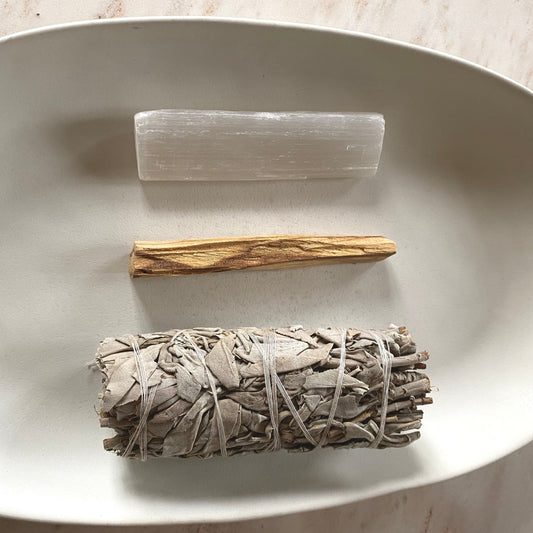
Take ten minutes in which you don't have to be reachable. Light a candle or hold a stone in your hand that feels grounding to you. Don't create a perfect altar, create a real moment.
Breathe out consciously three times and then quietly name what is there right now: “I feel ...” Stick to simple words, without explaining. Then ask yourself: “What is true for me today?” and “What can I let go of so that I come closer to myself?”
End the ritual with a decision you can really keep. Maybe you don't reply to a message straight away. Maybe you go to bed earlier. Maybe you cancel an appointment or allow yourself to ask for help. Change often doesn't show itself in spectacular turns, but in these quiet acts of staying true to yourself.
Honest self-reflection doesn't lead you to a flawless version of yourself. It leads you into a more honest, softer and clearer relationship with yourself. And when you meet yourself there again and again, your inner home becomes a place where you want to stay.